

RAP Processing Guide
RAP Processing: Turning Reclaimed Asphalt Into a Consistent, Usable Material
Reclaimed asphalt pavement already contains two valuable ingredients: aggregate and asphalt binder.
But getting RAP back to the plant is only the beginning.
How RAP is processed can affect its gradation, consistency, moisture, fines content and ultimately how easily it can be incorporated into new asphalt mixtures.
The goal of RAP processing should not simply be to make material smaller. It should be to produce a consistent, usable feedstock while retaining as much value in the material as possible.
Why RAP Processing Matters
RAP can come from pavement millings, full-depth pavement removal, plant waste and other sources. That means the material arriving at an asphalt plant can vary significantly in size, composition and condition.
Before RAP can be reliably incorporated into new asphalt mixtures, producers may need to reduce oversize material, control gradation, separate different sizes and create a more consistent stockpile.
Good RAP processing focuses on four things:
Consistent Size & Gradation
A controlled finished product gives the asphalt plant greater control over the material entering the mix.
Screening and fractionation can separate RAP into different size ranges, allowing producers to manage coarse and fine RAP independently when appropriate.
Control Unwanted Fines
Smaller is not always better.
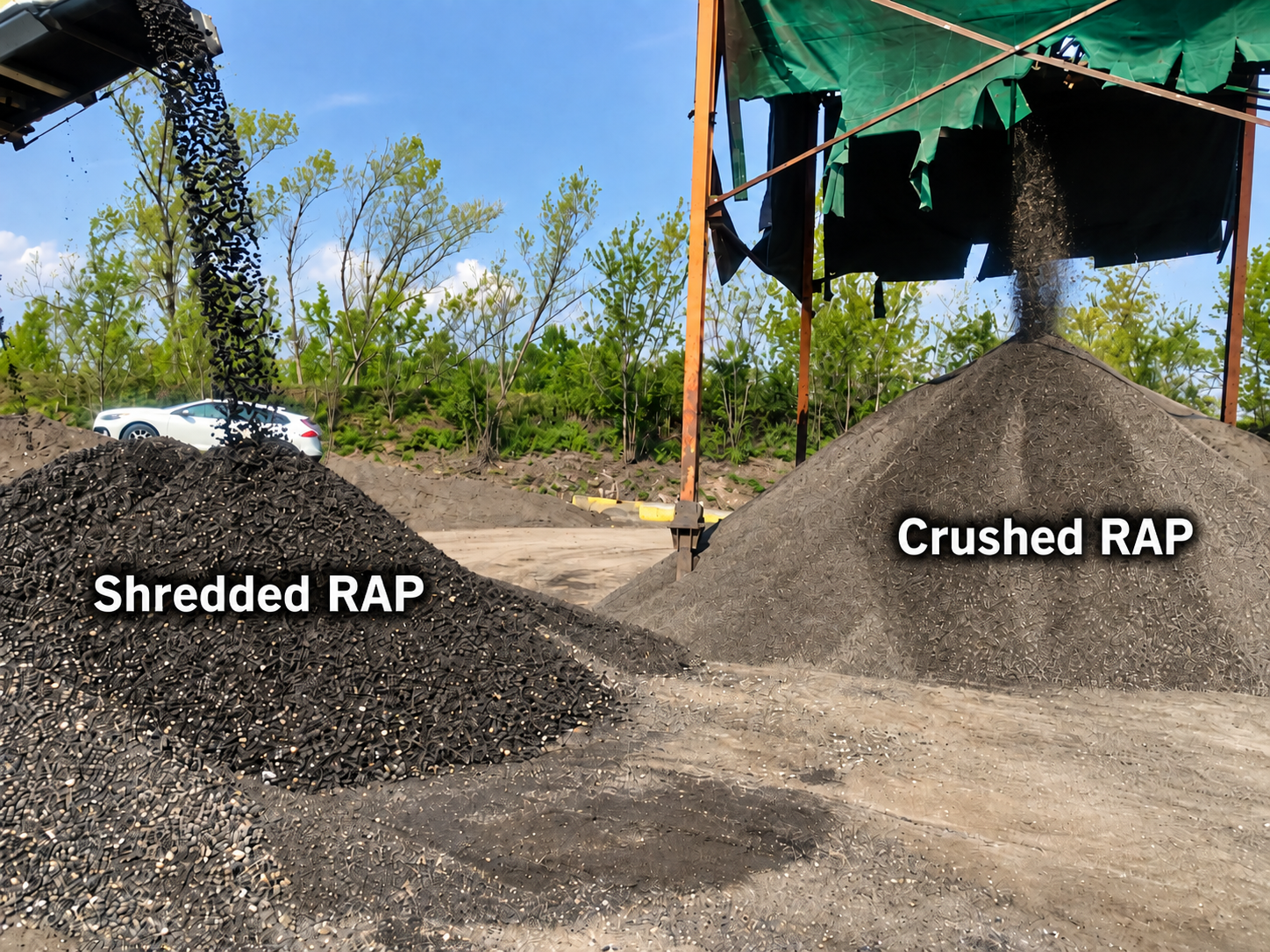
Aggressive size reduction can fracture aggregate and increase the amount of very fine material in the finished RAP. Excess dust and fines can affect mix-design flexibility and may limit how much RAP can practically be incorporated into certain mixtures.
The objective is to achieve the required top size without unnecessarily reducing good aggregate beyond that point.
Manage Moisture
RAP retains moisture differently than virgin aggregate.
Excess moisture must ultimately be removed during asphalt production, which can increase fuel consumption and reduce plant production rates.
Proper stockpile design, drainage and material handling can therefore affect more than storage—it can affect production efficiency.
Reduce Variability
The more predictable the RAP, the easier it becomes to characterize and incorporate into a mix design.
Separating known sources, preventing contamination, processing material consistently and properly managing stockpiles all contribute to a more uniform finished product.
Crushing vs. Shredding RAP
There is more than one way to process reclaimed asphalt pavement.
Traditional RAP processing commonly uses crushers and screens to reduce material to a desired top size. Crushing can be an effective solution, particularly when large pavement pieces or oversize material must be reduced.
But the way that size reduction occurs matters.
Impact Crushing
Impact crushers reduce material using high-speed impact forces.
That energy can effectively break large material down, but continued impact can also fracture aggregate that may already be small enough for reuse and create additional fines.
For RAP applications, equipment settings, crusher speed and the desired finished size can all influence the resulting material.
The goal shouldn’t be maximum breakage. It should be controlled processing.

Slow-Speed Shredding
Slow-speed shredding approaches RAP reduction differently.
Instead of relying primarily on high-speed impact, shredding uses controlled cutting, tearing and breaking forces to reduce larger pieces and agglomerated RAP.
This creates an opportunity to achieve the required material size while reducing unnecessary impact on aggregate that is already usable.
Shredding can be particularly valuable when the objective is to:
- Break apart large or agglomerated RAP
- Produce a controlled top size
- Limit unnecessary aggregate fracture
- Reduce generation of unwanted fines
- Process difficult or moisture-heavy material
- Prepare RAP for screening and further separation
The best processing method depends on the incoming material, required finished product, plant design and production goals.
Screening & Fractionating RAP
Size reduction is only part of the process.
Screening allows processed RAP to be separated by particle size, helping producers create a more predictable material.
Some operations use a single processed RAP stockpile. Others fractionate RAP into separate coarse and fine products.
Fractionation can provide greater control over:
- Aggregate gradation
- RAP binder contribution
- Mix-design adjustments
- Material variability
- RAP usage across different mix designs
The right approach depends on how the RAP will ultimately be used.
Better Processing Can Create More Usable RAP
The economics of RAP are ultimately tied to how much useful material makes it back into production.
Producing a controlled, consistent RAP product can help asphalt producers make better use of the aggregate and binder already contained in their stockpiles.
So before looking only at tons per hour, ask another question:
Your Stockpile Matters Too
Even properly processed RAP can become more difficult to use if it isn’t handled correctly afterward.
Keep RAP Clean
Soil, concrete, construction debris and other contaminants can affect the quality of the final RAP product.
Minimize Moisture
RAP tends to hold water. Proper drainage and covered storage where practical can help reduce moisture entering the plant.
Avoid Unnecessary Compaction
Heavy equipment operating directly on RAP stockpiles can compact or agglomerate the material.
Understand Your Sources
RAP from a single known project may behave differently than a blended stockpile containing material from numerous sources.
The more producers understand about the material entering the pile, the better they can manage the material leaving it.

A Different Way to Process RAP
CAMS Centauro
The CAMS Centauro combines slow-speed shredding, screening and magnetic separation in one mobile processing system.
Rather than relying solely on high-speed impact crushing, the Centauro uses CAMS slow-speed shredding technology to reduce and separate material before screening it to the desired finished size.
For asphalt producers, the objective is straightforward:
Process the RAP you need without unnecessarily processing the material you don’t.
The Centauro is designed to help producers:
- Process large and agglomerated RAP
- Control finished material size
- Reduce unnecessary fines and dust
- Screen material in the same processing system
- Remove ferrous contamination through magnetic separation
- Process challenging and wet material
- Operate using onboard diesel power or external electric power
Start With the Material
Every RAP operation is different. Your incoming material, moisture, production requirements, desired finished size and mix designs all influence the right processing approach.
Whether you’re considering mobile processing or a stationary RAP system at your plant, Hitek can help evaluate your application, equipment options, plant layout and system design.
Tell us what you’re processing today, what equipment you’re using and what you’d like to improve—from managing oversize and unwanted fines to producing more consistent RAP for your plant.
Let’s discuss your material and your goals.


