

RAP Research Center
What Is Your RAP Processing System Actually Producing?
Tons per hour tells you how quickly material moves through a machine. It does not tell you whether the finished RAP is the right material for your asphalt plant.
To evaluate a processing system, look at what happens to aggregate gradation, fines, binder distribution, moisture and usable product yield.
The practical question is:
Are you producing more material your plant can use—or simply making your stockpile smaller?
Are You Breaking RAP Clusters, or Fracturing Aggregate?
A large RAP particle may be a single large stone, several smaller stones held together by asphalt binder, or a combination of both.
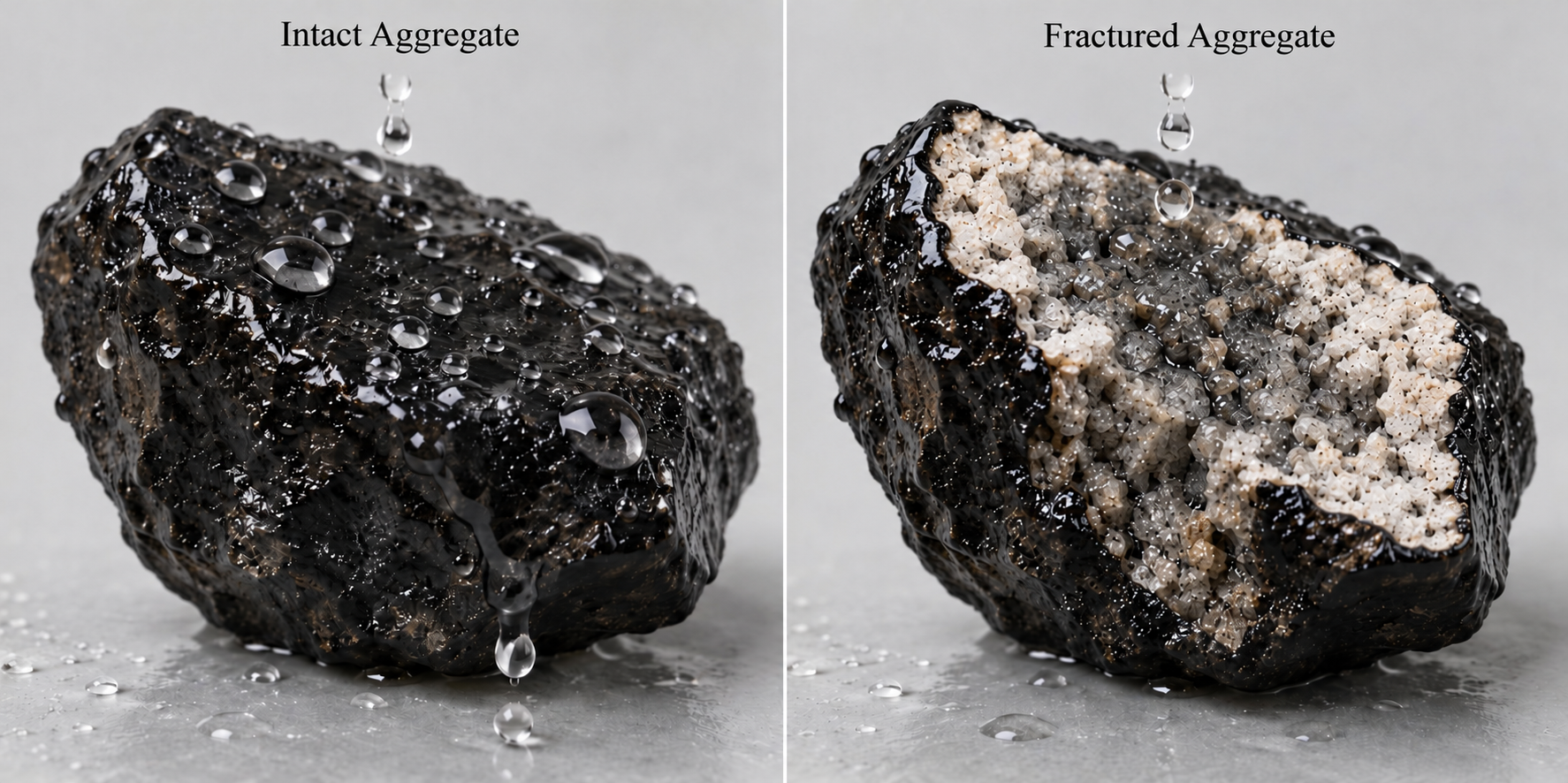
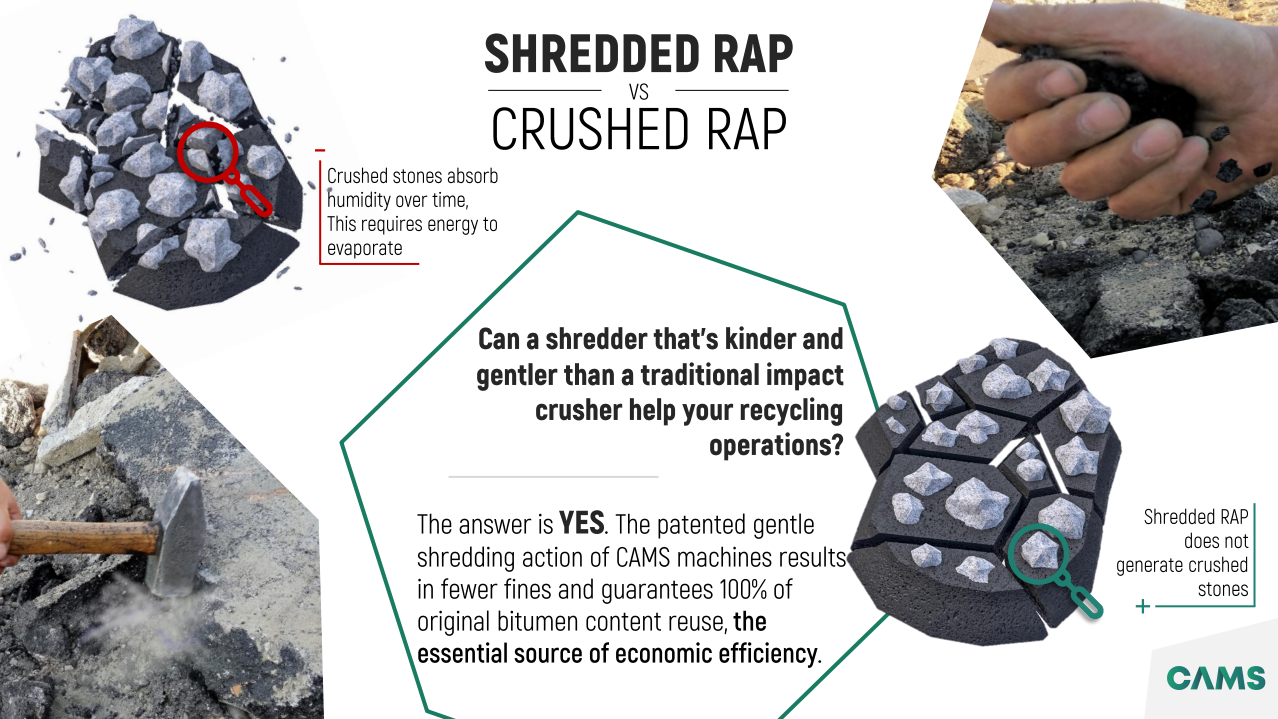
These require different amounts of size reduction. Breaking apart an asphalt-bound cluster can release aggregate that already meets your requirements. Fracturing the underlying stone changes the aggregate gradation.
To investigate the difference, compare two measurements:
- RAP particle-size distribution: the size of the processed material before binder removal.
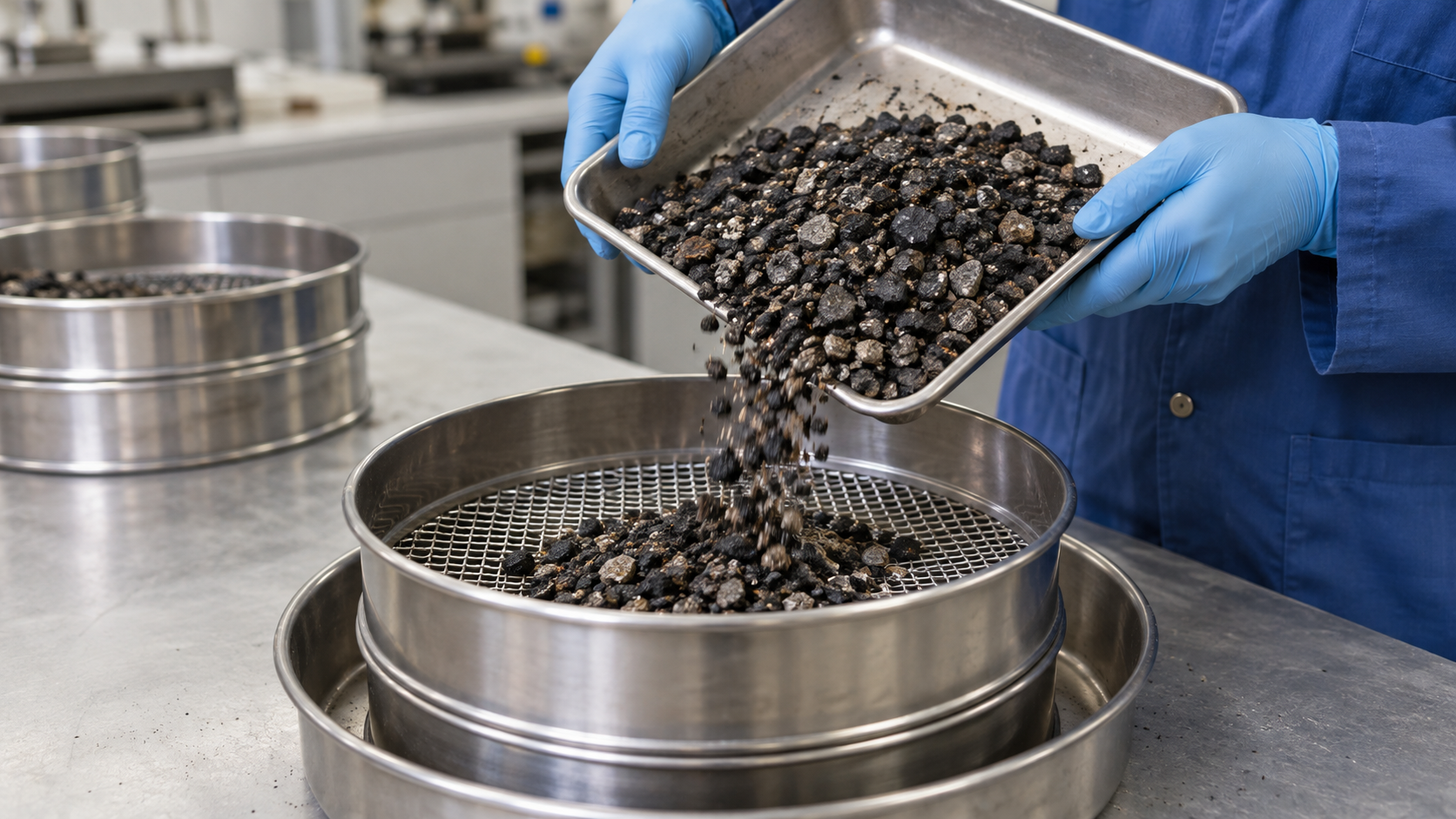
- Recovered aggregate gradation: the size distribution of the underlying aggregate after binder removal using the laboratory’s approved procedure.
A smaller finished RAP particle does not automatically mean a better finished aggregate.
When evaluating slow-speed shredding, ask whether it achieves the required product size while limiting unnecessary aggregate breakdown.
Are Excess Fines Limiting Your RAP Use?
Reducing RAP to the required size is only part of the job. What happens to the aggregate during processing matters too.
When size reduction fractures stone that is already small enough for reuse, it can create additional fines. Material passing the No. 200 sieve—0.075 mm—becomes part of the aggregate blend your mix designer must account for.
Fines belong in asphalt mixtures. The concern is producing more than your intended mix can accommodate.
Additional fines can affect voids in mineral aggregate (VMA) and dust-to-binder ratio, potentially limiting RAP use even when the plant has capacity to handle more reclaimed material.
FHWA explains that processing RAP to smaller top sizes can increase material passing the No. 200 sieve, potentially limiting RAP use through VMA and dust-to-binder requirements. FHWA, Chapter 3—RAP Processing
Where Does This Show Up in Your Operation?
Consider the questions your production and mix-design teams already encounter:
- Do certain mixtures reach their fines limit before reaching your desired RAP percentage?
- Does reducing oversize leave you with a finer overall product than you need?
- Are you adjusting the virgin aggregate blend to accommodate fine RAP?
- Are some processed fractions accumulating because your mixtures cannot consume them?
These questions can help identify whether fines are a constraint worth investigating.
Why Consider Slow-Speed Shredding?
The processing objective is to break apart oversized and asphalt-bound RAP while limiting unnecessary fracture of the underlying aggregate.
That is the reason to consider a different size-reduction approach: whether it can deliver the required product size while preserving more of the aggregate gradation your plant needs.
Start with your existing gradation reports and mix-design constraints. They can help frame a useful discussion about whether CAMS shredding deserves a closer look for your operation.
Where Is Your RAP Binder Going?
Your RAP stockpile contains asphalt binder with potential value in future mixtures. But binder content alone does not tell you how much of that value makes it back into production.
The important question is where the binder ends up after processing—and whether your plant can use the material carrying it.
Put a Number on the Inventory
Binder contained in a material stream can be estimated using:
Dry material tons × binder-content fraction = contained binder tons
For example, 1,000 dry tons of RAP with a measured binder content of 5% contains 50 tons of asphalt binder.
That describes the binder inventory. The amount credited toward virgin binder reduction depends on the mix design, applicable requirements, and binder availability.
Connect Processing to Usable Value
Processing deserves attention when valuable material is available in the yard but difficult to incorporate into your mixtures.
Your existing binder-content results, gradation reports and stockpile records can help identify where that disconnect occurs.
The goal is to preserve material in forms your plant can put back to work.
Follow the Material Streams
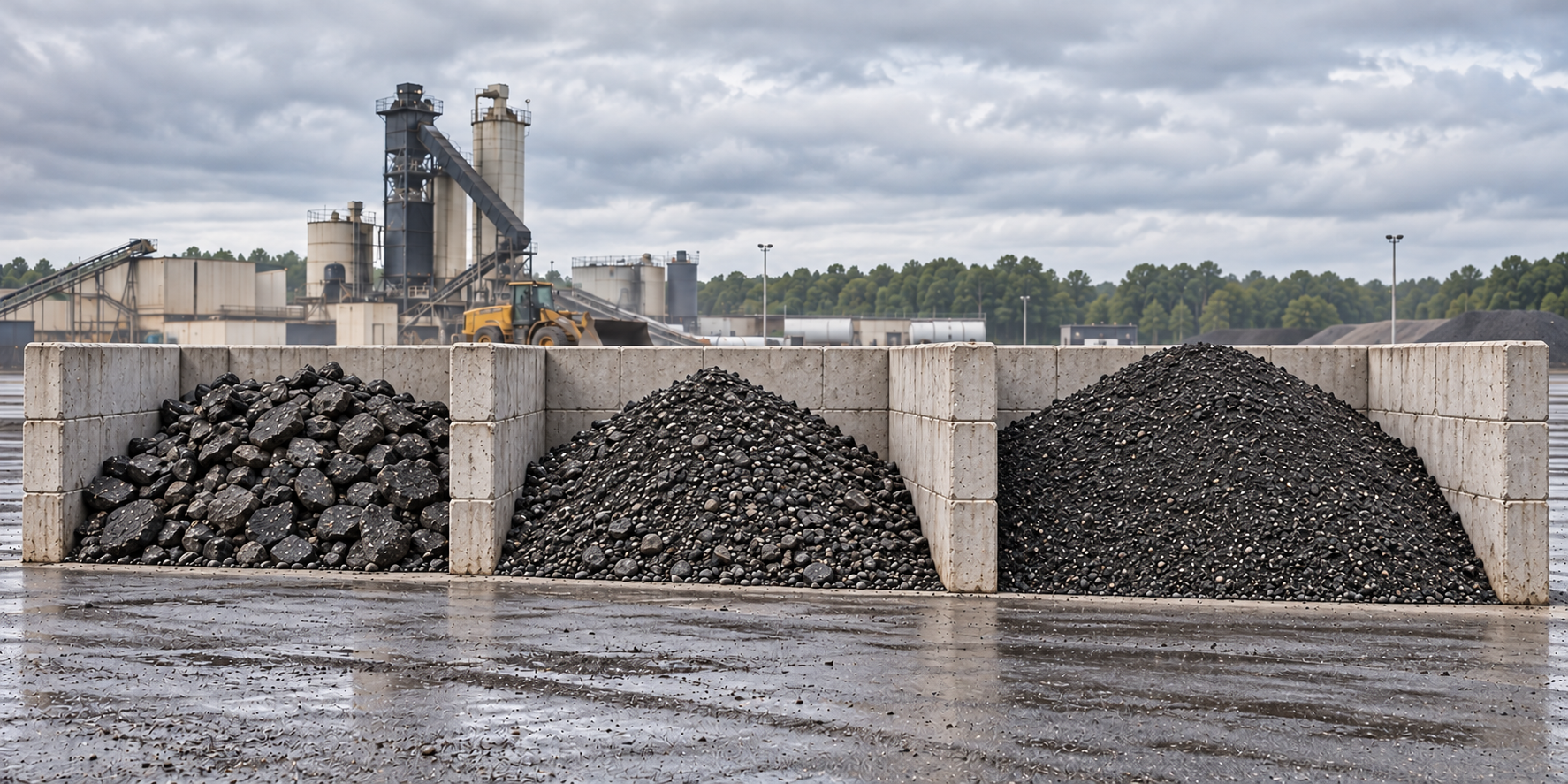
Coarse RAP, fine RAP and material removed from the process can have different binder contents. Look at each stream’s quantity, binder content and eventual use.
Consider:
- Are your processed fractions being consumed in asphalt production or accumulating in storage?
- Is binder-rich material being diverted to lower-value applications?
- Are collected fines returned to mixtures or removed from the operation?
- Does the product you generate match the gradation your mix designs need?
Binder carried into a fine fraction is not automatically lost. Its value depends on whether that fraction can be used in an acceptable mixture.
RAP Percentage vs. Reclaimed Binder Ratio
Two mixtures containing the same percentage of RAP can contain different amounts of reclaimed asphalt binder.
The difference is the binder content of the RAP itself. Understanding that distinction helps explain why increasing RAP use requires more than choosing a higher feed percentage.
What Do These Numbers Measure?
RAP percentage describes how much reclaimed asphalt pavement is included in the mixture.
Reclaimed binder ratio describes the reclaimed binder’s share of the mixture’s total asphalt binder. For a mixture containing RAP without recycled shingles, this can be calculated from the RAP percentage, its measured binder content and the total mixture binder content.
Retained RAP Binder Can Reduce Added Binder
Consider a plant producing 1,000 tons of asphalt mix with:
- 30% RAP: 300 tons of reclaimed material
- 6% total binder content: 60 tons of asphalt binder required
Compare two illustrative RAP products:
| Binder calculation | RAP containing 4% binder | RAP containing 5% binder |
|---|---|---|
| RAP used | 300 tons | 300 tons |
| Binder contained in the RAP | 12 tons | 15 tons |
| Added virgin binder needed* | 48 tons | 45 tons |
The RAP containing 5% binder supplies three additional tons of reclaimed binder—reducing added virgin binder by three tons per 1,000 tons of mix.*
At an illustrative virgin binder price of $600 per ton, that represents $1,800 in potential binder savings.
FHWA identifies the replacement of a portion of virgin aggregate and asphalt binder as a potential economic benefit of RAP use, while emphasizing proper mixture design and production.
Why Processing Matters
Processing does not create binder. The opportunity is to retain existing binder in material your plant can use.
If binder-bearing fines are removed, diverted to lower-value uses or cannot be accommodated in your mixtures, some of that binder inventory may not return to asphalt production.
That is why aggregate preservation, fines control and usable material recovery deserve attention alongside throughput.
FHWA distinguishes reclaimed binder ratio from RAP percentage because RAP sources can contain different amounts of asphalt binder.
How much of the binder entering your processing system comes back in RAP your plant can actually consume?
This example assumes the mix design credits all measured RAP binder toward the total binder requirement. Actual virgin binder demand depends on binder availability, mixture design and applicable specifications. The 4% and 5% figures illustrate the calculation; they are not measured crusher-versus-CAMS results.
Would Fractionation Help Your Mix Designs?
Processing RAP to a suitable top size does not necessarily produce the best blend for every mixture.
Fractionation separates RAP into different particle-size ranges, commonly coarse and fine stockpiles. Those fractions can then be characterized and fed in proportions that suit the intended mixture.
FHWA identifies separating RAP by size as a way to improve control and reduce variability. Its reclaimed-binder guidance also explains that fractionation can provide greater flexibility in meeting mixture-design requirements.
Different Fractions Can Carry Different Binder Contents
Coarse and fine RAP fractions may have different binder contents as well as different aggregate gradations.
Knowing those properties allows your mix-design team to evaluate both the aggregate and reclaimed binder contributed by each fraction.
Increasing the fine fraction may increase reclaimed binder contribution, but it also changes the aggregate blend. The useful balance depends on your mixture requirements.
Where Could This Help Your Operation?
Consider:
- Are you using one RAP stockpile across mixtures with different gradation requirements?
- Could separate coarse and fine feeds give your mix designer more flexibility?
- Does one fraction accumulate while another is consistently consumed?
- Are differences in binder content being accounted for when adjusting RAP proportions?
The objective is to produce fractions your plant can use in the right proportions—not simply create more stockpiles.
Discuss the Whole Processing System
When evaluating CAMS, consider the shredder, screening configuration, stockpile arrangement and plant feed capabilities together.
The useful question is whether that system can produce the fractions your operation needs, with consistent properties and sufficient demand for each product.
Technical references: FHWA—RAP Processing and FHWA—Reclaimed Binder Content.
Less Moisture Means Less Energy Spent Drying
The moisture entering your asphalt plant affects the energy required to produce each ton of mix. Water must be heated and evaporated before the material can become part of the finished product.
The Federal Highway Administration notes that fine RAP can hold substantial moisture and that removing it during production can increase fuel consumption and reduce plant production rates.
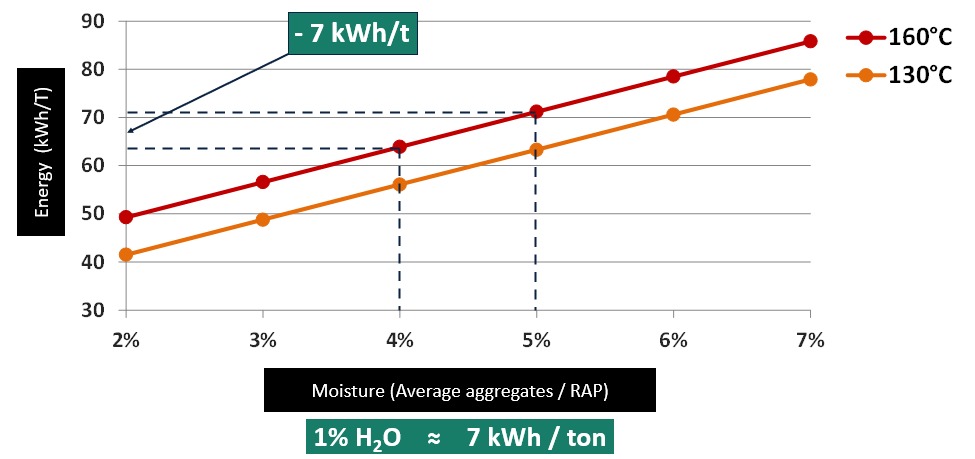
What the Chart Shows
The accompanying chart illustrates how energy demand rises with average aggregate/RAP moisture at production temperatures of 130°C (266°F) and 160°C (320°F).
Reducing average feed moisture from 5% to 4% lowers the indicated energy requirement by approximately 7 kWh per metric tonne, at the same production temperature.
That is energy spent removing water—not producing additional asphalt.
The chart represents average moisture across the aggregate/RAP feed. A moisture reduction in the RAP stockpile alone must be weighted by the RAP’s proportion of that feed.
Where RAP Processing Fits In
Limiting unnecessary aggregate fracture and fines generation provides an opportunity to address the characteristics of the RAP entering your plant.
Preserving the asphalt coating on aggregate may also influence moisture uptake. However, higher binder content alone does not establish lower stockpile moisture. Gradation, rainfall, drainage, storage and handling all affect the result.
Processing and stockpile management should therefore work together:
- Limit unnecessary fines generation.
- Keep processed fractions separated and usable.
- Provide effective drainage.
- Use covered storage where practical.
- Track moisture in the material actually feeding the plant.
Connect Moisture to Operating Cost
When evaluating your RAP operation, consider:
- Does fine RAP consistently carry more moisture than your other fractions?
- Do wet-stockpile conditions coincide with higher fuel consumption or lower production?
- Are drainage or storage conditions adding to the drying load?
- Could changes in processing and handling help deliver more consistent feed moisture?
The opportunity is to preserve usable RAP while reducing the water your plant must heat and evaporate.
Actual energy savings depend on measured moisture reduction, feed proportions, plant efficiency and operating conditions.
Technical Reference
FHWA: Reclaimed Asphalt Pavement in Asphalt Mixtures: State of the Practice (2011), Chapter 3—“Stockpiling RAP.”
Chart note: Approximate energy demand at the indicated temperatures and average aggregate/RAP moisture levels. Values are per metric tonne. Actual plant consumption varies; the chart does not represent measured CAMS performance.
What Is Limiting Your RAP Use?
Excess fines, unused fractions, binder contribution and moisture can each affect the value recovered from your RAP.
Hitek can help review your existing gradation reports, binder-content results, processing equipment and production goals to identify where a different processing approach may deserve consideration.
We support mobile and stationary applications, including equipment selection, plant layout and system design.

